
Welcome to our comprehensive guide on how to choose, and have the best experience, on your flotilla sailing holiday in Greece. In the summer of 2022, we were lucky enough to spend 6 months in Greece as flotilla leaders in the Saronic Gulf. When we applied for what looked like an interesting sailing opportunity and without really knowing anything about flotillas (we do not have them in and around South Africa or Switzerland, our home countries!) we certainly did not expect that we would be Athens bound 13 days later!
This turned out to be the experience of a lifetime, exhilarating, exhausting, we cried (well, I did) a lot and laughed even more. We were one of the few mature (I turned 60 during our time in Greece) flotilla leaders and while we certainly did not have the nimbleness and energy of the younger flotilla crews, we had tons of sailing and life experience. We did manage to party with the best of them and loved the guests who joined in enthusiastically, including a darling 84-year-old skipper!
We hope this guide answers some questions and that you gain some insight into the ins and outs of being on a flotilla.
What is a flotilla?
A flotilla refers to a group of boats or yachts that sail together in a coordinated manner, often following a pre-planned route. It can be organized for various purposes, such as leisure cruising, racing events, or even humanitarian missions. Flotilla holidays are popular among sailing enthusiasts and those looking for a unique way to explore the waters, especially in destinations with beautiful coastlines or island clusters. The composition of a flotilla can vary greatly depending on its purpose and context.
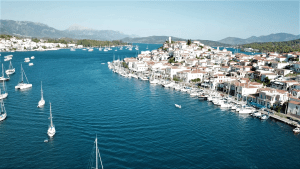
Here are a few examples of who might go on different types of flotillas:
Leisure Flotilla: In this case, a flotilla could be organized for recreational purposes, such as yacht club outings or group sailing adventures. Participants on a leisure flotilla are often boat owners or individuals who have access to boats and enjoy sailing. It can include families, friends, or sailing enthusiasts who want to enjoy the open waters together.
Exploration Flotilla: An exploration flotilla might be composed of scientists, researchers, or adventurers aiming to study marine life, ecosystems, or uncharted territories. This type of flotilla often includes experts in marine biology, oceanography, geology, and other relevant fields. They may collaborate with specialized crews, navigators, and support personnel to ensure safety and maximize the scientific outcome of the expedition.
Humanitarian Flotilla: Humanitarian flotillas are organized to provide aid, support, or raise awareness for specific causes or regions. Participants on these flotillas can include volunteers, activists, medical professionals, or individuals passionate about humanitarian efforts. These flotillas often work in cooperation with NGOs or international organizations to deliver supplies, offer medical assistance, or address specific humanitarian needs.
Protest Flotilla: Protest flotillas involve activists who use boats or ships as a platform to express their discontent or raise awareness about certain issues. Participants in protest flotillas can range from environmentalists advocating for marine conservation to political activists protesting against policies or practices. These flotillas often attract people with a strong dedication to the cause they are advocating for.
What is the difference between a flotilla and a bare charter?
A flotilla and a bare charter are two different concepts related to the rental or chartering of boats or yachts.
Here’s an explanation of each term:
Flotilla: As mentioned, a flotilla refers to a group of boats or yachts that travel together on a pre-planned route or itinerary. It typically involves a lead boat, known as the flotilla leader or skipper, who is responsible for guiding the group and ensuring their safety. Flotilla sailing is a popular option for people who want to enjoy the experience of sailing independently while benefiting from the support and camaraderie of a group. Participants in a flotilla generally have their own individual boats or yachts and join the flotilla for the duration of the journey. You can hire a local skipper if you are uncertain about handling the boat yourself in unknown waters.
Bareboat Charter: A bareboat charter, on the other hand, refers to the rental or chartering of a boat or yacht without any crew or provisions. In a bareboat charter, the person or group renting the vessel assumes full responsibility for operating and navigating the boat. They are essentially “bare” of the crew, hence the term “bareboat.” The charterer needs to have the necessary boating skills and qualifications to handle the vessel. The charterer is responsible for all aspects of the voyage, including navigation, provisioning, and general maintenance. Bareboat charters are often sought by experienced sailors or those who prefer the freedom and independence to explore at their own pace.
In summary, a flotilla involves a group of boats sailing together with a lead boat, while a bareboat charter refers to the rental of a boat or yacht without crew, where the charterer takes full responsibility for operating and navigating the vessel.
- Ionian Islands: Located on the western coast of Greece, the Ionian Islands are known for their lush greenery, calm waters, and picturesque anchorages. Major islands in this region include Corfu, Zakynthos, Kefalonia, and Lefkada.
- Cyclades Islands: The Cyclades are famous for their iconic white-washed buildings, blue-domed churches, and charming traditional villages. This group of islands is situated in the Aegean Sea and includes popular destinations like Mykonos, Santorini, Paros, and Naxos.
- Saronic Gulf Islands: Close to Athens, the Saronic Gulf Islands are easily accessible and offer a great sailing experience. Aegina, Hydra, Poros, and Spetses are among the islands in this region, known for their rich history, beautiful architecture, and lovely beaches.
- Dodecanese Islands: Situated in the southeastern Aegean Sea, the Dodecanese Islands are known for their medieval architecture, ancient ruins, and vibrant culture. Rhodes, Kos, Patmos, and Symi are some of the popular destinations in this area.
- Sporades Islands: Located on the northeastern part of the Aegean Sea, the Sporades Islands are renowned for their natural beauty, pine forests, and emerald waters. Skiathos, Skopelos, and Alonissos are the main islands in this region.
- North Aegean Islands: The North Aegean Islands offer a more off-the-beaten-path sailing experience. Islands like Lesvos, Chios, and Samos are known for their unspoiled landscapes, traditional villages, and warm hospitality.
- Crete: Crete is the largest Greek island and lies in the southern part of the Aegean Sea. It offers diverse sailing opportunities, ranging from exploring its beautiful coastline to visiting historical sites and enjoying the vibrant Cretan culture.
These are just a few examples of the different areas to sail in Greece. Each region has its own unique charm, natural beauty, and cultural attractions, making Greece a fantastic destination for sailing enthusiasts.
Which is the best route for you?
- Beginners: The Saronic Gulf is an excellent choice for novice sailors. This region is characterized by calm waters, short distances between islands, and numerous sheltered anchorages. You can start your journey from Athens and explore popular islands such as Aegina, Poros, Hydra, and Spetses. The Saronic Gulf provides a great introduction to Greek sailing with its manageable sailing conditions and vibrant island culture. This was our route and in 5 months we experienced bad weather 4 or 5 times.
- Intermediates: The Cyclades Islands are a fantastic option for sailors with some experience. This island group, located in the central Aegean Sea, offers a mix of lively ports and remote anchorages. Begin your adventure from Athens and visit iconic destinations like Mykonos, Santorini, Paros, and Naxos. The Cyclades boast reliable winds and longer sailing distances, providing intermediate sailors with a slightly more challenging yet rewarding experience.
- Experienced Sailors: For those seeking a more adventurous and demanding sailing experience, the Ionian Islands on the western coast of Greece are an excellent choice. This region is renowned for its gentle breezes, clear waters, and lush landscapes. Start your journey from Lefkada or Corfu and navigate your way through stunning islands such as Zakynthos, Kefalonia, and Paxos. The Ionian Sea offers longer passages, open-water sailing, and the opportunity to explore both Greek and Italian coastal towns.
It’s important to note that weather conditions and personal preferences can influence the suitability of these routes. It’s always recommended to consult with local charter companies, obtain updated nautical charts, and pay attention to weather forecasts before embarking on any sailing trip in Greece.
Advantages and disadvantages of going on a flotilla:
Social Interaction: One of the main advantages of a flotilla holiday is the opportunity to meet and socialize with other like-minded sailors. You can form friendships, exchange sailing experiences, and enjoy shared activities throughout the journey. It offers a sense of camaraderie and can be especially appealing for solo travellers or those seeking a more sociable vacation. Do make it a point of checking that there will be other boats on your flotilla if the social aspect is important to you. We had one group of flamboyant lads who were very disappointed to learn that they were the only boat on the Flotilla that week! We made up for it by arranging so many fun activities (mostly involving tavernas) that they left exhausted and apparently had their best flotilla ever!
Safety and Support: Joining a flotilla provides a sense of security as you sail in a group. If any issues arise, such as mechanical problems, adverse weather conditions, or navigation challenges, you can rely on the support and assistance of the flotilla’s lead crew or other participants. They can offer guidance, share knowledge, and help overcome any difficulties that may arise during the trip.
Itinerary and Route Planning: Flotilla holidays typically follow a predetermined route or itinerary, designed by experienced organizers. This saves you the effort of extensively researching and planning your own journey. The route usually includes attractive destinations, scenic anchorages, and recommended activities, ensuring that you get to explore some of the best spots in the area.
Flexibility and Freedom: While there is a planned route, flotilla holidays still allow for individual flexibility. You can sail at your own pace, explore nearby areas, or deviate slightly from the group if you wish. This offers a balance between structured group activities and personal exploration, giving you the best of both worlds.
Guidance and Expertise: Flotillas are often led by experienced skippers or lead crews who have extensive knowledge of the sailing area. They can provide guidance on local regulations, and navigation, and even recommend the best restaurants, attractions, or hidden gems along the way. Their expertise adds value to your journey and helps you make the most of your time on the water.
Learning Opportunity: A flotilla can be an excellent learning experience for novice sailors. You can observe and learn from more experienced sailors in the group, gaining valuable tips and techniques to improve your own sailing skills. The support team often offers guidance and instruction, which can help build confidence on the water.
Shared Resources: Being part of a flotilla means access to shared resources and facilities. This can include shared radio channels for communication, group discounts on marina fees, shared tools and spare parts for minor repairs, or shared meals and social events. This cooperative environment can be helpful in case of emergencies or unexpected equipment failures, as there is a higher chance of finding assistance or the necessary supplies within the group. These shared resources can enhance your overall experience and make the trip more enjoyable.
Disadvantages of booking a flotilla holiday:
Lack of Privacy: Flotilla holidays involve sailing in a group, which means you’ll be in close proximity to other yachts. This may limit your privacy, especially if you prefer a more secluded and intimate vacation experience.
Restricted Itinerary: While the planned itinerary can be advantageous, it also means you have less flexibility to deviate from the group’s schedule. If you prefer to explore at your own pace or have specific destinations in mind, a flotilla holiday may not be the ideal choice. You flotilla leaders should be open to you exploring on your own from time to time, there are no hard and fast rules as long as you stay in touch.
Limited Freedom: Being part of a flotilla means adhering to certain guidelines and rules set by the lead crew. You may need to follow specific routes, meet at designated times, or anchor at suggested locations. If you prefer complete freedom and independence, a flotilla holiday might feel restrictive.
Interpersonal Dynamics: Flotilla holidays involve interacting with a diverse group of people. While this can be an enriching experience, it also means that personalities may clash or conflicts may arise within the group. Dealing with different preferences, expectations, or conflicts could be a challenge.
Potential Crowding: Depending on the popularity of the flotilla holiday, there is a possibility of encountering crowded anchorages and marinas. During peak seasons, finding suitable moorings or berths may be more challenging, and you may have to share facilities with a larger number of people.
Ultimately, the decision to book a flotilla holiday depends on your preferences for social interaction, level of independence, and desire for a structured sailing experience. Considering the advantages and disadvantages can help you determine if it aligns with your vacation expectations.

When is the best time to book a flotilla in Greece?
The best time to book a flotilla in Greece can vary depending on your preferences and the specific region you plan to visit. However, there are a few factors to consider when determining the ideal time:
Weather: Greece experiences a Mediterranean climate, with hot and dry summers and mild winters. The peak season for flotilla sailing in Greece is typically from May to September when the weather is warm and the seas are calm. If you prefer more moderate temperatures and fewer crowds, you might consider booking in the shoulder seasons of late spring (May and June) or early autumn (September and October).
Availability: Flotilla companies in Greece tend to have limited availability, especially during the peak season. If you have specific dates in mind, it’s advisable to book well in advance to secure your spot and have a wider selection of yachts to choose from.
Cost: Prices for flotilla holidays can vary throughout the year. During the high season, demand is usually higher, and prices may be more expensive. If you’re looking for a more budget-friendly option, consider booking during the shoulder seasons or even the off-peak season.
Festivals and Events: Greece is known for its vibrant culture and numerous festivals and events throughout the year. If you’re interested in experiencing local celebrations or want to avoid crowded periods, research the festival calendar of the specific region you plan to visit and plan your flotilla booking accordingly.
In summary, the best time to book a flotilla in Greece is typically during the warm and calm months of May to September. However, consider your personal preferences, availability, cost, and any local festivals or events when making your decision. It’s always a good idea to reach out to flotilla companies or consult with travel agents who specialize in sailing holidays to get more specific advice tailored to your needs.
How do I choose which company to book my flotilla?
Different companies or groups may offer varying levels of support, itineraries, and social activities. It’s advisable to research and choose a reputable flotilla operator that aligns with your preferences and needs. Naturally, recommendations from friends and family are the best! Read reviews on Trust Pilot to get a more accurate review rather than relying on just the good ones the company will post on their page!
A list of flotilla companies in Greece:
Sunsail (www.sunsail.com)
Moorings (www.moorings.com)
Poseidon Charters (www.poseidoncharters.com)
Nautilus Yachting (www.nautilusyachting.com)
Sail Ionian (www.sailionian.com)
Sailing Holidays (www.sailingholidays.com)
Kavas Yachting (www.kavas.com)
Nisos Yacht Charter (www.nisosyachtcharter.com)
Istion Yachting (www.istion.com)
Seafarer Sailing (www.seafarersailing.co.uk)
Ionian Charter (www.ionian-charter.com)
Dream Yacht Charter (www.dreamyachtcharter.com)
Goolets (www.goolets.net)
Sail Greece Yachts (www.sailgreeceyachts.com)
Sail Aegean (www.sailaegean.com)
Argolis Yacht (www.argolis-yacht.com)
Greek Sails (www.greek-sails.com)
Vernicos Yachts (www.vernicos.com)
Ionian Cruises (www.ioniangold.com)
Please note that the availability and offerings of these companies may vary, so it’s always recommended to visit their websites or contact them directly for the most up-to-date information.
Some considerations regarding the safety of a flotilla on a yacht:
Weather conditions: It’s important to monitor weather forecasts and avoid sailing in adverse conditions. Strong winds, storms, or rough seas can increase the risks associated with sailing in a flotilla. Your lead crew should be on top of weather forecasts, we checked 4 times a day and would change the route if anything looked nasty. We did have occasion to stay on one island for 2 nights due to bad weather.
Competence of the crew: The crew’s knowledge, experience, and skill in operating the yacht are crucial. They should have a good understanding of navigation, seamanship, and safety procedures. If the crew is inexperienced, it’s advisable to seek guidance from a professional skipper or join a flotilla organized by a reputable charter company.
Communication and coordination: Effective communication among the flotilla members is vital to ensure the safety of everyone involved. Establishing a clear communication plan, using VHF radios or other means, allows for immediate contact in case of emergencies or changes in plans. This is critical to avoid having your holiday spoilt with shouting and arguing!
Navigation and collision avoidance: Proper navigation and collision avoidance techniques should be employed to minimize the risk of accidents within the flotilla. Keeping a safe distance from other yachts, maintaining situational awareness, and following international navigation rules are important. This might seem obvious but quite a few of our “ducklings” had not sailed in months so a bit of reading and reminding yourself of what to do in certain situations is a must.
Safety equipment and procedures: The yacht should be equipped with essential safety gear, including life jackets, flares, fire extinguishers, and a first aid kit. Regular safety drills and familiarization with emergency procedures are recommended for the crew.
Experience level of participants: If you are considering joining a flotilla, it’s essential to evaluate your own experience and skills. Some flotillas may require a certain level of sailing experience to participate, while others may offer additional support and guidance for less-experienced sailors. (See above).
Remember, safety should always be a top priority when participating in any sailing activity. It’s advisable to consult with experienced sailors, charter companies, or sailing organizations to assess the specific risks and safety considerations associated with a flotilla.
What to pack for a flotilla holiday?
Packing for a flotilla holiday can vary depending on the specific destination, duration of the trip, and personal preferences. However, here are some general items you should consider packing:
1. Clothing:
· Lightweight, breathable clothes suitable for warm weather.
· Swimwear, including swimsuits, bikinis, or trunks.
· Cover-ups or sarongs for the beach or on-deck lounging.
· Casual outfits for exploring onshore or dining out.
· Light jacket or sweater for cooler evenings.
· Hat, sunglasses, and sunscreen for sun protection.
2. Footwear:
· Comfortable shoes for walking onshore and exploring.
· Sandals or flip-flops for onboard and beach use. Aqua shoes. (click on the link, there are loads on Amazon)
· Deck shoes or non-marking, non-slip footwear for sailing.
3. Personal Essentials:
· Toiletries, including toothbrush, toothpaste, soap, shampoo, etc.
· Medications, if needed.
· Travel-sized first aid kit. (link to a nice waterproof one).
· Insect repellent.
· Personal hygiene products.
4. Practical Items:
· Valid passports, IDs, and necessary travel documents.
· Cash, credit cards, and/or travel money.
· Snorkelling gear or water sports equipment, if desired.
· Waterproof bag (check the link) for protecting personal belongings on deck or during water activities.
· Beach towels.
· Travel adapters and chargers for electronic devices.
· Waterproof phone case or pouch.
· Portable power bank.
5. Entertainment and Comfort:
· Books, magazines, or e-readers for leisure time. Colouring book for kids.
· Travel games or playing cards.
· Portable Bluetooth speaker.
· Travel pillow and lightweight blanket for added comfort during the journey.
6. Kitchen and Galley Supplies:
· It’s advisable to check with the flotilla organizer regarding kitchen utensils.
7. Navigation tools:
· Binoculars, compass, and marine charts. Handheld VHF radio if you have one.
8. Provisioning:
· Bring non-perishable snacks and beverages you enjoy.
Remember to check the specific details and requirements of your flotilla holiday, as some organizers may provide certain items or have specific regulations. Consider the limited storage space on board, you need to find a space for those solid, bulky suitcases! Also, be mindful of the luggage weight restrictions if you’re flying to the starting point of the flotilla.
Summary
Naturally, you will have expectations when arriving for your flotilla based on what you booked e.g. Route, boat specs etc. To have the best holiday of your life please BE FLEXIBLE.
Occasionally clients were booked on a different boat than the one they expected. It does happen in peak season when the Med is frantiacally busy, and boats are in short supply. If it can’t be fixed immediately by the marina, then accept it graciously and ask for compensation when you are back home. We had clients arrive and their boats were in a different marina! Things can and do go wrong.
Routes – so many guests arrived with a pre-planned notion in their heads of the exact day-by-day route we would follow as per the company’s websites. In the Saronic Gulf, there were 14/16 flotillas averaging anywhere from 12 to 30 boats per flotilla! We cooperated and worked together via a weekly spreadsheet we coordinated for all flotilla leaders every Sunday night. This was a huge help in determining where each flotilla was and when. You WILL see all the places you are excited about, just perhaps in a different order. Then of course there is the weather which throws a spanner in the best-laid plans.
A flotilla is based on a group of yachts sailing together for whatever reason. This does not mean you are part of a sorority that has to hold hands and do everything together. Evening meals are just suggestions, you are always free to “do your own thing.”
Similarly, the route is a suggestion and most want to follow the lead crew. However, you are the captain of your own boat and if you wish to spend a night in a different anchorage, let your lead crew know, keep in touch with them and meet up again en route the next day.
Accept that you are sailing with several different nationalities, ages and cultures when doing a flotilla. Most times it works, sometimes it doesn’t! In general, everyone is in a fantastic mood, (you are on holiday after all) the swimming is fantastic, the scenery is gorgeous, the food and drinks are delicious and Mama Mia music follows you everywhere!
Please feel free to drop us a line if you have any questions, we are happy to help.
Captain Mike and First Mate (and author) Nikki.
Discover more from http://www.sailingandsunshine.com
Subscribe to get the latest posts sent to your email.
 www.sailingandsunshine.com
I am impressed!!
LikeLike
Thanks Maggie, learnt the hard and fast way about flotillas!
LikeLike
Very informative article and it is my intention to join one of the flotillas in Greece. Thank you for sharing.
LikeLike
Thank you so much Wayne! You are welcome to reach out at anytime if you have any questions. Mike and Nikki.
LikeLike