
How it works, what can go wrong, and what to do when no water is coming out the back 🚿⚓
If you’ve ever started your engine, glanced over the stern, and felt that little spike of panic when no cooling water is coming out, welcome to a rite of passage for sailors everywhere. Unfortunately for us, today is that day — and Captain Underpants is beginning his investigation and hoping he does not have to dive!.
Before he disappears beneath the surface, let’s walk through how the engine cooling system works, why that reassuring stream of water matters so much, and what to check when it stops flowing.
How the cooling system works (the simple version)
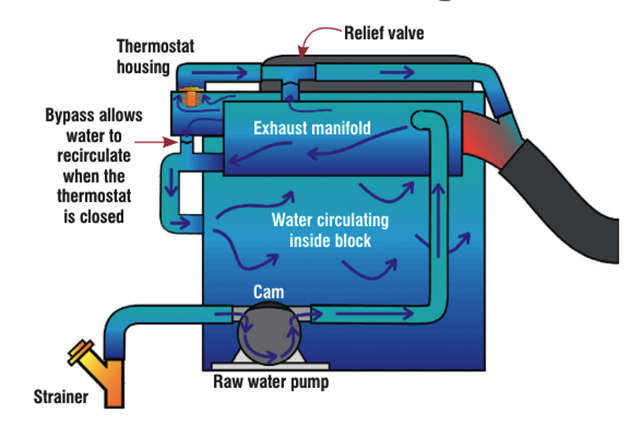
Most sailing yachts use a raw water cooling system (sometimes combined with a heat exchanger). The basic idea is straightforward:
- Seawater is drawn in from outside the boat
- It flows through the engine to absorb heat
- The warmed water is expelled out the exhaust at the stern
That little splashing sound and steady stream of water at the back of the boat is your engine saying:
👉 “I’m cool, calm, and carrying on.”

The key components (and where things usually go wrong)
1. Seacock (through-hull intake)
This is the valve that lets seawater into the boat.
Common problems:
- Closed seacock (it happens 😅)
- Blocked by seaweed, plastic, or marine growth
👉 If this is blocked outside the hull, someone (ahem… Captain Underpants) may need to dive.
2. Raw water strainer
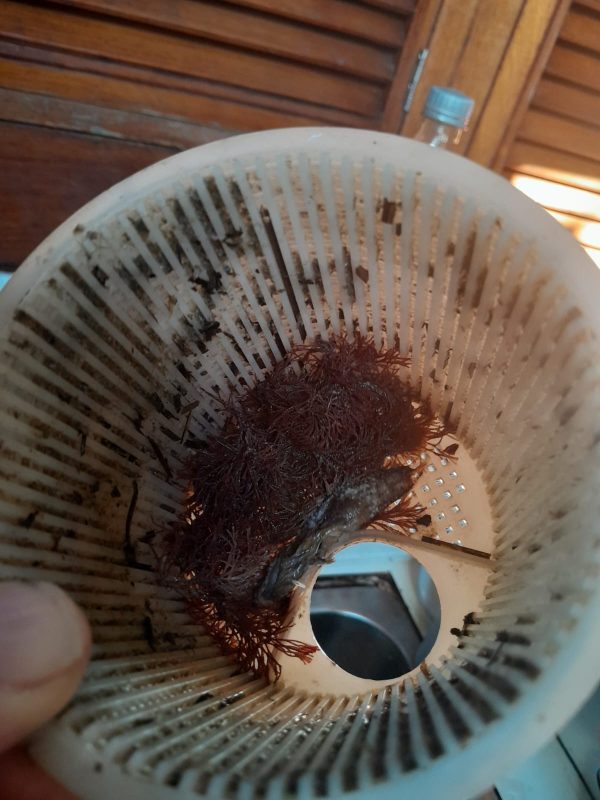
The strainer catches debris before it reaches the engine.
Common problems:
- Full of weed, jellyfish bits, shells, or slime, we had a small fish in ours, plus some weeds
- The lid was not sealed properly, allowing air in
👉 Always the first thing to check inside the boat.
3. Raw water pump & impeller
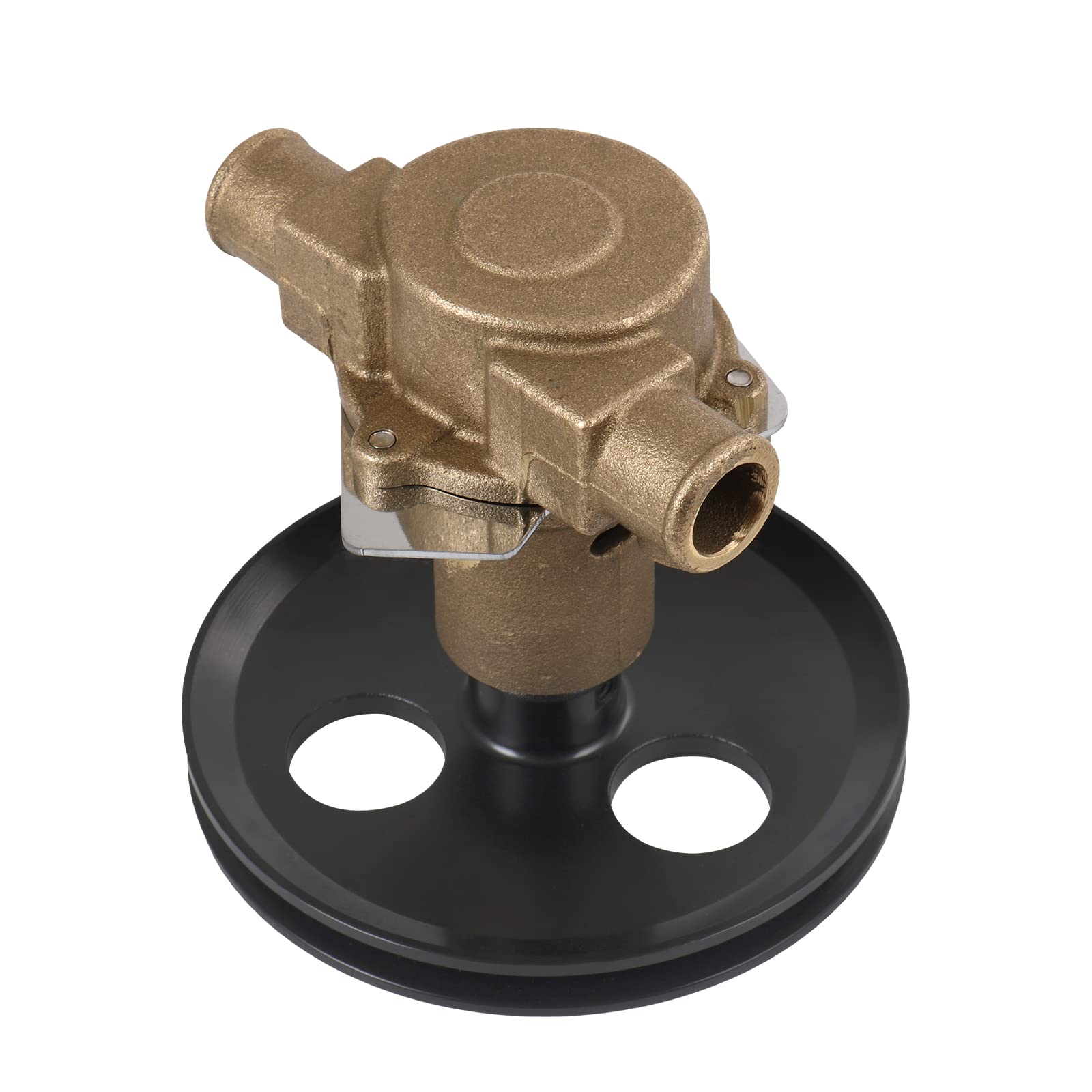
This pump moves seawater through the system using a rubber impeller.
Common problems:
- Impeller blades worn, cracked, or missing
- Impeller completely destroyed (often after running dry)
👉 A failed impeller = no water flow = engine overheating very quickly.
Looks like our impeller is not working. We used our spare one last time this happened, so Amazon, here we come for a new one, actually two, as we need a spare.
4. Heat exchanger (if fitted)
The heat exchanger keeps seawater separate from engine coolant.
Common problems:
- Blocked tubes from scale, debris, or broken impeller blades
- Reduced flow over time rather than sudden failure
5. Exhaust elbow
The mixing elbow combines hot exhaust gases with cooling water.
Common problems:
- Carbon buildup
- Salt and corrosion restricting water flow
👉 This is a sneaky one and often overlooked.
No water out the back: what to do immediately
If you start the engine and no cooling water appears within 10–20 seconds:
🚨 Step 1: Turn the engine off
Do not “wait and see.” Engines overheat fast.
🔍 Step 2: Work through this checklist (in order)
- Is the seacock open?
- Check the raw water strainer
- Clean it
- Re-seat the lid properly
- Check hoses for collapse or leaks
- Inspect the impeller
- Even if it “looks okay,” missing blades mean trouble
- Check the exhaust outlet
- Mud, weed, or critters love this spot
🧜♂️ Step 3: Dive check (Captain Underpants’ moment)
If everything inside looks fine, it’s time to check outside the hull:
- Intake blocked by weed?
- Plastic bag stuck over the through-hull?
- Marine growth choking the opening?
This is where masks, fins, and a sense of humor come in handy.
Can I run the engine briefly without water?
Only for a few seconds, and only if absolutely necessary for diagnosis. Running dry can:
- Destroy the impeller
- Overheat the engine
- Damage exhaust components
Short answer: don’t risk it.
How to prevent this next time
- Clean the raw water strainer regularly
- Replace impellers annually (even if they look fine)
- Carry a spare impeller and gasket onboard
- Backflush the intake occasionally
- Keep an eye (and ear) on your exhaust every time you start the engine
That little splash is one of the most comforting sounds on a boat.
Final thoughts from the engine room
Cooling system issues are stressful — especially when you’re anchored somewhere beautiful and suddenly imagining worst-case scenarios. The good news?
Most “no water out the back” problems are simple blockages or impeller issues, not catastrophic failures.
So while Captain Underpants goes exploring below the waterline sometime in the future, we’re crossing our fingers that it’s just a clump of weed and not an epic tale for the logbook.
If you would like a downloadable or printable checklist for the engine cooling system on your boat, then click here.
💙 Fair winds, cool engines, and may your exhaust always splash reassuringly.
Captain Underpants and Nikki.
Discover more from http://www.sailingandsunshine.com
Subscribe to get the latest posts sent to your email.
 www.sailingandsunshine.com