
If you sail a catamaran, there’s one anchoring topic that almost everyone agrees on (which is rare in sailing 😄):
Use a bridle, not a single snubber.
A bridle shares the load between both hulls, reduces yawing, and gives you a quieter, more comfortable night at anchor. But simply having a bridle isn’t enough — how long it is and how it’s deployed matter just as much as the rope size.
Let’s break it down without the maths headache.
Why Catamarans Need Longer Bridles
Because catamarans are wide, the bow cleats are much farther apart than on monohulls. That means:
- Bridle legs must be longer to avoid sharp angles
- Short bridles create huge sideways (lateral) forces
- Those forces can damage splices, shackles, deck hardware, or the bridle itself
Rule of thumb:
👉 Catamaran bridles should be 25–30% longer than monohull recommendations.
This extra length:
- Accommodates the wide beam
- Allows for longer, safer deployments
- Reduces shock loads and sideways strain
Diameter Matters — But Length Matters More
Yes, catamarans generally need thicker bridle lines than monohulls due to:
- Higher windage
- Two hulls pulling at angles
- A tendency to sail around at anchor
Most cruisers should:
- Size up ¼” to ½” thicker than monohull guidelines
- Choose the thicker end if your boat has high freeboard, a hard top, or lots of windage
But here’s the key takeaway:
A short bridle — even a thick one — can still be overloaded.
Longer deployments dramatically reduce both tension and damaging sideways forces.
The Angle Is Everything
The most important concept is the inside angle where the two bridle legs meet near the chain hook.
- 45° or less = happy gear
- More than 45° = rising loads
- Short, wide angles = danger zone
As the angle opens up:
- Each bridle leg carries more load
- Lateral forces skyrocket
- Splices and shackles take a serious beating
This is why short bridles often fail — not because they’re weak, but because the geometry is working against them.
So… How Long Is “Long Enough”?
A “long deployment” means enough length to keep the inside angle at 45° or less.
For example:
- Cleats ~18 ft (5.5 m) apart → ~24 ft (7.3 m) bridle legs
- Cleats ~24 ft (7.3 m) apart → ~31 ft (9.5 m) bridle legs
Yes, that sounds long — but the physics are on your side.
What If the Water Is Too Shallow?
Good question, because we’ve all been there.
If you can’t deploy long from the bow without the hook touching bottom, you can:
- Lead the bridle from midships or aft cleats
- Use bow cleats or chocks as fairleads
- Still achieve the overall length without putting the hook on the seabed
At that point, you can make an informed decision:
- Stay put with a short deployment (knowing the risks)
- Move to deeper water
- Re-rig creatively to get length
Y-Splice vs Independent-Leg Bridles
- Independent-leg bridles handle side loads better and have a wider safety margin
- Y-spliced bridles work with almost any chain hook, but must be deployed long to avoid tearing the splice apart
If your hook only supports a Y-splice, length becomes even more critical.
The Big Picture (aka: Sleep Better at Anchor)
You’ve got three choices:
- Short bridle, correct size → works… but you’re living on the edge
- Huge oversized rope → safe-ish, but uncomfortable and hard to handle
- Right-size rope + long deployment → smooth, quiet, and kind to your boat
Option 3 takes about 30 seconds more effort — and lets you drink wine from real glasses and sleep through squalls.
Quick Recommendation Summary
- ✔️ Add 25–30% length over monohull bridle recommendations
- ✔️ Increase rope diameter ¼”–½” for cats
- ✔️ Go thicker for heavy boats or high windage
- ✔️ Keep the inside angle 45° or less
- ✔️ Use independent-leg bridles if possible
- ✔️ If using a Y-splice, always deploy long
Bridles & Snubbers for Monohulls: What Actually Applies?
First things first: monohulls usually use snubbers, not bridles
- Monohull → single-line snubber (most common)
- Catamaran → two-leg bridle (essential)
So yes — if you’re on a monohull, you don’t need a bridle in most situations, and the post can feel overkill at first glance.
But here’s where it does apply…
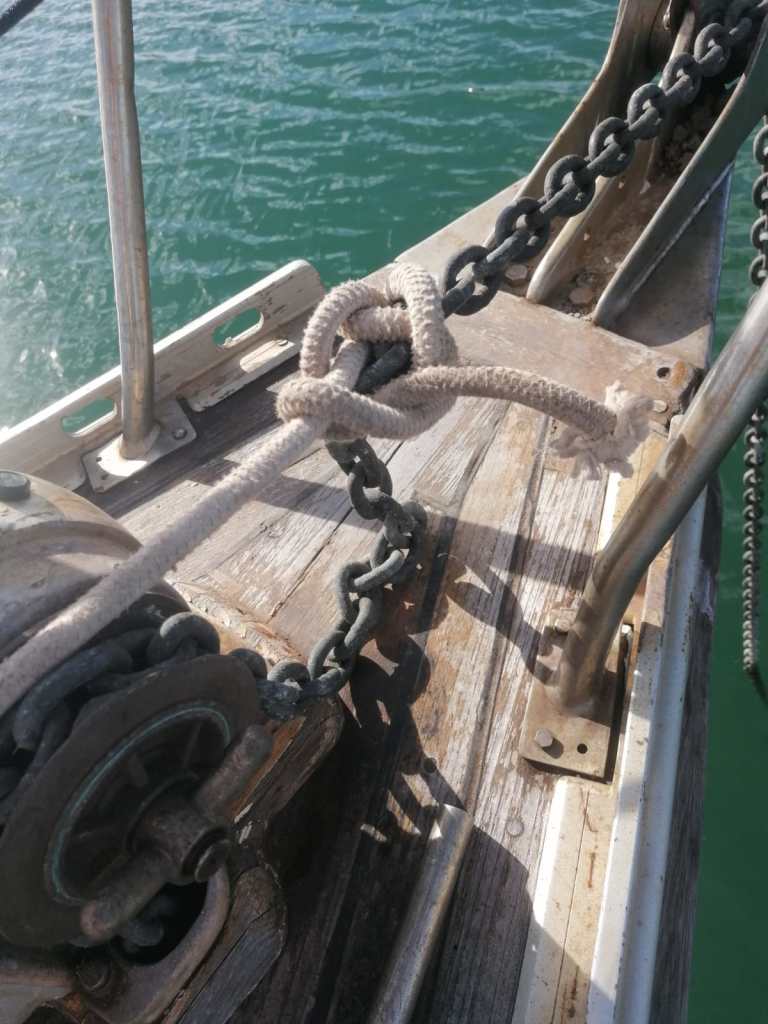
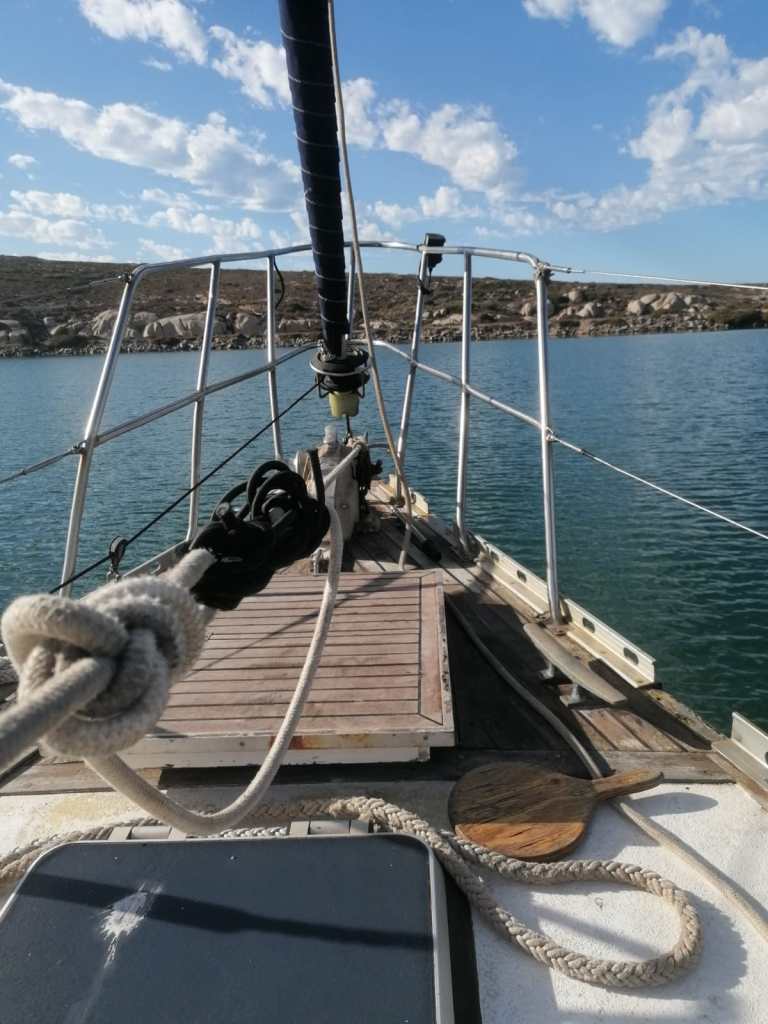
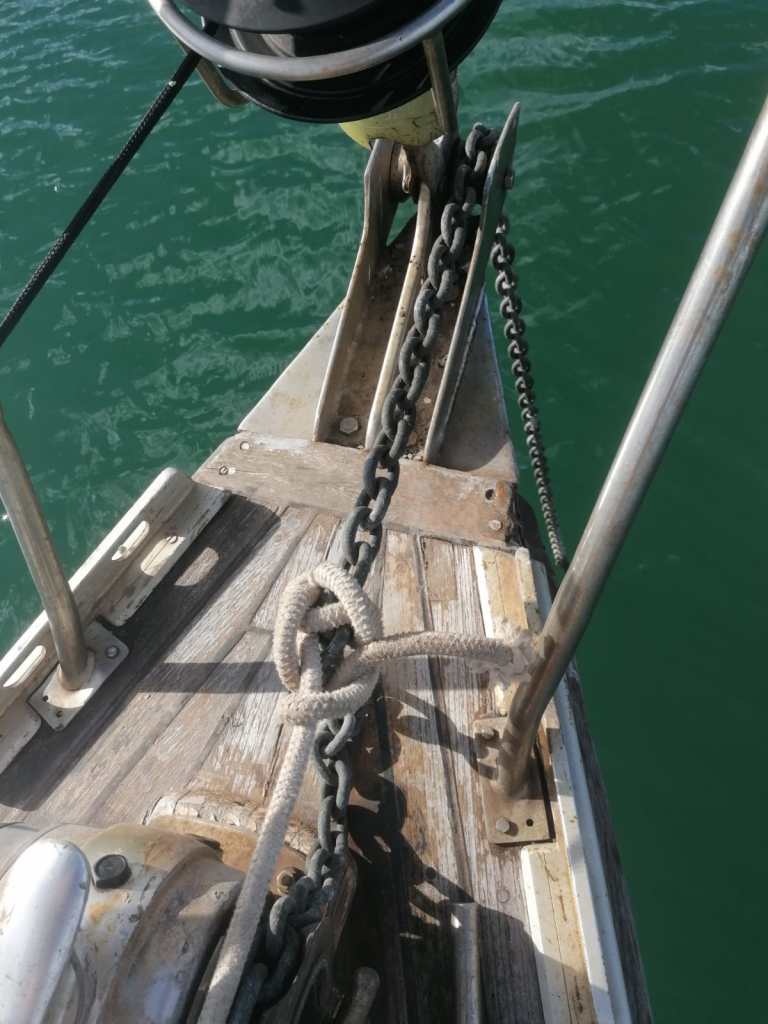
What a Snubber Does on a Monohull
A snubber:
- Takes load off the windlass
- Reduces shock loads on the chain
- Makes anchoring quieter and gentler
- Protects deck gear and anchor gear
On a monohull, a properly sized and well-deployed snubber achieves the same goals a bridle does on a cat.
Length Still Matters (Just as Much)
This is the biggest crossover lesson from the catamaran discussion.
Short snubber = higher shock loads
Longer snubber = smoother, safer anchoring
Even on a monohull:
- A very short snubber becomes stiff
- Stiff = less stretch
- Less stretch = higher peak loads when the boat snatches
Rule of thumb for monohulls:
- Minimum 15–20 ft (4.5–6 m)
- Many cruisers prefer 25–30 ft (7–9 m) in exposed anchorages
If you’ve ever felt the boat slam at anchor, length is usually the issue, not diameter.
Snubber Diameter for Monohulls
Monohulls generally follow standard sizing tables, but:
- Heavier boats
- High windage (hard dodger, bimini, arch)
- Offshore or storm anchoring
…all benefit from sizing up one step.
For example:
- 40–45 ft monohull → often ½” or ⅝” nylon
- Full-keel, heavy displacement → err toward thicker
But again: length beats thickness for reducing peak loads.
Do Monohulls Ever Use Bridles?
Yes — sometimes.
Common monohull bridle uses:
- To reduce yawing at anchor
- To center the load and stop sailing around
- To lead lines to port and starboard cleats instead of a single bow cleat
- Heavy weather anchoring
This is often called a split snubber rather than a true bridle.
It:
- Shares load between cleats
- Reduces side-to-side shock
- Keeps the boat steadier in gusts
However:
- Forces are much lower than on cats
- Lateral loads are usually not extreme
- Deployment angles are narrower
So the catastrophic splice failures discussed in the article are rare on monohulls.
Why Monohulls Get Away With Shorter Snubbers (Most of the Time)
Monohulls:
- Weathervane naturally into the wind
- Have narrower bow geometry
- Generate less lateral force at anchor
- Load the snubber mostly in a straight line
That’s why:
- Single-line snubbers usually work fine
- Y-splices rarely fail
- Hardware sees far less side loading
But “usually fine” doesn’t mean “optimal”.
When Monohull Sailors Should Pay Attention to the Cat Lessons
You should think more like a cat sailor if:
- You anchor in strong reversing winds
- You sail at anchor badly
- You’re in tight anchorages with limited scope
- You’ve broken snubbers, hooks, or deck fittings before
- You’ve ever thought: “That didn’t sound healthy…”
In those cases:
- Longer snubbers
- Split leads
- Softer nylon
- Lower angles
…make a noticeable difference.
Simple Monohull Takeaway (No Maths Required)
- ✔️ Use a single long nylon snubber
- ✔️ Go longer before going thicker
- ✔️ Aim for smooth stretch, not brute strength
- ✔️ Consider a split snubber if your boat sails around
- ✔️ Quiet anchoring = lower loads = happier gear
Monohull vs Catamaran: Snubbers & Bridles at a Glance
| Topic | Monohull | Catamaran |
|---|---|---|
| Typical setup | Single-line snubber | Two-leg bridle |
| Why this works | Monohulls naturally sit head-to-wind | Wide beam needs load shared between hulls |
| Primary purpose | Reduce shock loads & protect windlass | Reduce shock loads and lateral forces |
| Number of attachment points | One (usually bow cleat) | Two (port & starboard bow cleats) |
| Yawing at anchor | Usually minimal | Common without a bridle |
| Load direction | Mostly straight-line | Multi-directional |
| Importance of length | Important | Critical |
| Effect of short deployment | Snatchy, noisy, higher shock loads | Very high loads, splice & hardware risk |
| Recommended length focus | Longer is smoother and quieter | Longer is safer and stronger |
| Line diameter approach | Follow standard sizing, size up if heavy | Size up ¼”–½” over monohull |
| Inside angle concern | Generally small | Must stay ≤45° |
| Lateral (sideways) forces | Low | High if deployed short |
| Common failure points | Chain hook, windlass, cleat | Bridle splice, shackles, deck gear |
| Y-splice usage | Rare | Common, but must be deployed long |
| Independent-leg option | Sometimes used | Preferred if chain hook allows |
| Depth limitations | Less problematic | Often limits deployment length |
| Creative solutions needed | Occasionally | Frequently (fairleads, midships leads) |
| Comfort at anchor | Improves with longer snubber | Improves dramatically with longer bridle |
| Overall anchoring personality | Calm, predictable | Strong, stubborn, needs persuasion 😄 |
In short: monohulls benefit from longer snubbers for comfort and gear protection, while catamarans rely on long, properly sized bridles for structural safety. Same physics — very different personalities.
Checklist: Are You Deployed Long Enough?
Before you pour the sundowners, take 60 seconds and run through this:
✔️ Your deployment is probably long enough if…
- ⛵ The boat accelerates and slows smoothly instead of snapping tight
- 🔇 You don’t hear loud chain snatch or deck creaks
- 🧵 Your snubber or bridle stays under steady tension, not jerky loads
- ⚓ The anchor hook sits well below the bow, not close to it
- 📐 (Bridles) The inside angle where the lines meet is 45° or less
- 🌬️ Gusts don’t make the boat leap or slam
- 😴 You sleep through wind shifts instead of waking up to every gust
⚠️ Your deployment is likely too short if…
- 💥 The boat snaps hard when the wind builds
- 🔊 You hear banging, groaning, or sudden jolts
- 🧷 The chain hook rides close to the bow roller
- 🪢 Bridles look wide and tight rather than relaxed and long
- 🛠️ You’ve had unexplained wear on splices, shackles, or cleats
- 😬 You keep checking things because it feels wrong
🔧 If you’re limited by depth…
- Can you lead the snubber or bridle to midships or aft cleats?
- Can you use fairleads or chocks instead of bow-only attachment?
- Would moving slightly deeper allow a safer deployment?
- Is tonight worth staying put — or is a small move the smarter option?
If you’ve asked yourself any of these before… you already know the answer 😉
A Short Conclusion
Anchoring problems rarely come from weak gear — they come from geometry and shock loads we don’t see. Whether you sail a monohull or a catamaran, giving your snubber or bridle a little more length reduces stress on your boat, your gear, and you.
Thirty extra seconds at anchor can mean a quieter night, fewer failures, and waking up rested instead of rattled.
And that, in true Sailing & Sunshine fashion, is time very well spent 🌞⚓
Downloadable Sailing_and_Sunshine_Anchoring_Checklist
Calmer decisions at anchor usually mean… better sleep 😌⚓
Captain Mike and Nikki.
This is quite a technical issue for me (Nikki), and I did use AI here and there. Feel free to reach out if you have better suggestions or ideas, or share what works for you!
Discover more from http://www.sailingandsunshine.com
Subscribe to get the latest posts sent to your email.
 www.sailingandsunshine.com