
Stay self-reliant at sea! Discover the essential tools and spare parts every long-term cruiser should carry for safe, stress-free adventures offshore.
Life at Sea Means Being Prepared
When you live aboard or spend long stretches cruising, you quickly learn that there’s no hardware store around the corner. Out here, you are the electrician, plumber, and mechanic all in one. Having the right tools and spares on board isn’t just convenient — it’s what keeps your floating home safe and self-sufficient.
Essential Hand Tools
A well-equipped toolkit is your first line of defense against breakdowns.
Make sure you carry:
- ✅ A set of metric and imperial spanners and sockets
- ✅ A multibit screwdriver set (Flathead, Phillips, Torx, square)
- ✅ Adjustable wrenches in two sizes
- ✅ Allen keys/hex sets
- ✅ A sturdy hammer
- ✅ Needle-nose and slip-joint pliers
- ✅ Wire cutters and crimping tools
- ✅ Hacksaw with spare blades
- ✅ Utility knife with extra blades
- ✅ Measuring tape, calipers, and multimeter
Tip: Keep smaller hand tools in a waterproof roll or pouch — rust protection is key in salt air.
Power Tools Worth Having
A few portable power tools can make tough jobs much easier:
- Cordless drill/driver (with backup batteries)
- Angle grinder – useful for cutting, grinding, and polishing metal
- Small rotary tool (Dremel-style) – great for precision fixes and small parts
- 12V soldering iron – invaluable for onboard wiring work
If possible, choose battery tools that share a single charging system, and store them in a dry locker.
Plumbing Essentials
Even a small leak can quickly escalate into a major problem at sea. Pack these essentials:
- Hose clamps (assorted sizes — you’ll always need more!)
- Spare hose lengths for fuel, freshwater, and bilge systems
- Thread seal tape and marine-grade sealant
- Replacement washers, O-rings, and valves
- Spare freshwater pump and impeller kit
A simple rule: if it moves water, carry a backup.
Electrical Spares and Fixes
Electrical gremlins are inevitable — especially in humid, salty environments.
Keep a dedicated box for electrical spares that includes:
- Marine-grade tinned wire in multiple gauges
- Fuses (blade and glass types)
- Connectors and terminals
- Heat-shrink tubing and electrical tape
- LED bulbs for interior and navigation lights
- Spare switches and breakers
- Voltage tester or multimeter
Engine Room Must-Haves
Engines are happiest when you’re prepared for the worst.
Stock the following spares and fluids:
- Fuel filters and oil filters
- Engine belts and impellers
- Extra engine oil and coolant
- Zinc anodes
- Spare raw water pump (or at least a rebuild kit)
- Spare starter motor solenoid
- Gaskets and seal kits
- Spare starter motor, spare alternator, spare inverter, spare lift pump for diesel, oil for oil change, spare bilge pump/s. Captain Underpants added these last items. We have needed every single one of these items at some point over the years!
Keep a separate “grab kit” of these items labeled for quick access during emergencies.
Rigging and Deck Spares
Salt, wind, and UV take a toll on deck gear.
Consider carrying:
- Assorted shackles, pins, and split rings
- Spare blocks, sheaves, and line
- Sail repair tape and hand-sewing kit
- Spare halyard and sheet line
- WD-40 or a similar corrosion blocker
A small rigging knife and marlinspike are useful when working with lines or untying stubborn knots.
Safety and Emergency Tools
When things go wrong offshore, having reliable gear makes all the difference.
Don’t set sail without:
- Headlamps (plus spare batteries)
- Manual bilge pump handle
- Portable jump starter or power bank
- Cable ties and duct tape — endless uses!
- Emergency repair tape (self-fusing silicone type)
- Handheld GPS and backup compass

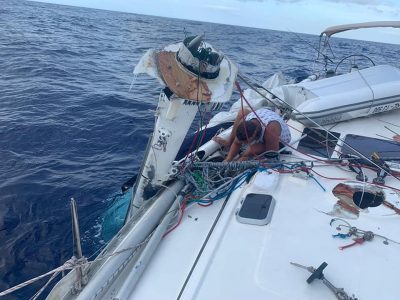
Pro tip: Store a few essential tools in a waterproof grab bag in case you need to abandon ship.
Organization is Everything
Even the best tools won’t help if you can’t find them.
Use clear plastic boxes or labeled dry bags to group spares by system — electrical, plumbing, engine, rigging.
An inventory checklist (or app) helps you track what you have and what needs replacing at your next port.
Final Thoughts
Long-term cruising is all about independence. With the right tools and spares aboard, you’ll face every repair with confidence — whether you’re anchored in a quiet bay or crossing oceans.
We would love to add YOUR suggestions, so please leave a comment.
Captain Mike and Nikki.
Affiliate Disclosure:
This post could contain affiliate links, but we don’t want to bombard you with loads of links. We use Amazon for just about everything because they ship wherever we are, and local yacht clubs are happy to receive packages for us. If you purchase through this Amazon link, Sailing & Sunshine may earn a small commission — helping us stay afloat (literally!) while recommending only products we truly love.
Discover more from http://www.sailingandsunshine.com
Subscribe to get the latest posts sent to your email.
 www.sailingandsunshine.com