
Living aboard with your furry first mate can be one of the greatest joys of cruising life. From playful dinghy rides to cozy anchor naps, pets bring warmth and companionship to every voyage. But keeping them happy, safe, and healthy at sea requires a little extra planning. Here’s your complete guide to training pets full-time on board. Learn how to exercise them effectively. Discover how to care for them properly. Also, find the must-have gear for smooth sailing.
🐾 1. Training Your Pet for Life Afloat
In general, a dog that is accustomed to noise can make a fine boating companion. The dog should be comfortable around water and well-behaved. It should also listen to “down” and “stay” commands. Excitable or skittish dogs may not be the best boating pals. The first priority of a responsible dog owner should be the safety and well-being of their dog.
To train a dog to live on a boat, start with a slow, calm introduction. Use positive reinforcement like treats and praise. Gradually acclimate them to the boat’s movement in shallow, calm water before taking longer trips. Essential safety measures include a life jacket. Ensure they can get on and off easily. Teach basic commands like “sit” and “no” to prevent them from falling overboard.
Training a cat to liveaboard on a boat requires a slow, patient approach. Focus on gradual acclimation and safety measures. Create a comfortable, familiar environment.

- Start on land: Let your cat explore the boat while it’s docked. Do this before the boat even moves. You can also let them explore while it’s trailered at home. Bring their favorite bed, toys, and litter box onboard to create familiar scents and positive associations.
- Short, calm trips: Once your cat seems comfortable in the stationary boat, start with very short trips in calm waters. This helps them get used to the motion gradually.
- Observe and adapt: Pay attention to your cat’s behavior. If they seem very stressed or seasick, slow down the training process. Determine if boat life is right for them. Some cats adapt well, others might not.
Here are some ideas that might help your pet (and you)!
- Non-slip deck mats for dogs
- Pet calming treats for travel for dogs and for cats
- Pet training pads
- Clicker training kit
- Travel crate or soft-sided carrier
⚓️ 2. Safety First: Life Vests & Secure Spaces
A dog (or cat!) overboard is every boater’s nightmare. A well-fitted pet life jacket is essential, even for strong swimmers. I like the one with the handle. It makes it easier to grab your pet with the boat hook as they go floating by.
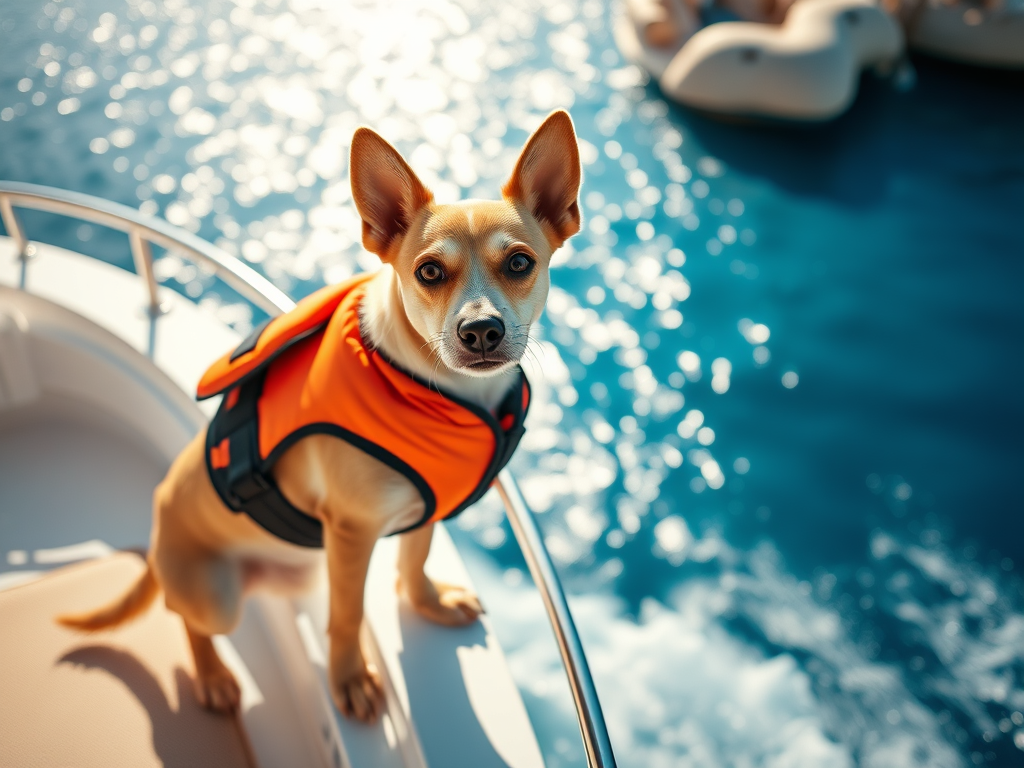
- Dog life vest with handle
- Cat flotation harness
- Waterproof pet ID tag – I think this is particularly clever, add your boat name and cell numbers to the tag.
- Pet tether or safety lead for deck
- UV-protection pet rash guard
- Sunscreen for your pet, yes, they can get sunburnt too. Watch their pads on hot decks too!
- Motion sickness pet tablets
☀️ 3. Shore Time and Exercise
Even boat pets need their stretch breaks! Regular shore excursions keep them healthy and happy. We love watching dogs bounding along the beach. They have so much energy and joy the minute they leap out of the dinghy!
- Floating dog toy or fetch ball
- Collapsible water bowl
- Compact pet first aid kit
- LED collar for night walks (brilliant idea!)
- Dog shoes for rocky beaches
- Hands-free leash for dinghy rides
- For cats, try a deck-safe harness and portable pet tent for lounging at anchor.
🐾 4. Feeding and Hydration
Stainless steel bowls slide around at sea — opt for non-slip silicone bowls or magnetic base sets. Store food in airtight containers to prevent moisture and pests.
- Non-slip silicone pet bowls
- Airtight food storage bins
- Pet water dispenser for travel
- Spill-proof mat
- Pet treat pouch
🌧️ 5. Storm Prep & Comfort
During a storm on a boat, prioritize your pet’s safety and comfort. Secure them below deck in a designated “safe space.” Ensure they wear a properly fitted life jacket.
Before the Storm Hits (Preparation):
- Check the weather forecast with your pet in mind. If possible, go ashore to a safer location before the storm hits.
- Create a “safe space” in an interior, secure area of the boat, like a cabin floor or even a bathroom, where they won’t roll around and where noise is reduced.
- Acclimate your pet to this space and their life jacket during calm conditions to reduce anxiety when a real storm occurs.
- Pack a pet emergency kit in a waterproof container with a few days’ supply of food, water, medications, a first-aid kit, copies of their medical records, and a recent photo of you together.
- Ensure proper identification, including a secure collar with an ID tag and an up-to-date microchip.
- Consult a vet about seasickness medication or mild sedatives if your pet is prone to anxiety or motion sickness.
During the Storm:
- Move your pet inside immediately and confine them to their designated safe space.
- Ensure the pet is wearing a life jacket with a handle for easy retrieval if needed.
- Secure all loose items around the pet’s area (and the rest of the boat) that could fall or slide and injure them if the boat rolls.
- Stay calm yourself. Pets can sense your stress, so a calm demeanor helps them feel more secure.
- Provide comfort and distraction using a favorite toy, a treat puzzle, or a piece of your clothing with your scent. Playing a TV or soft music can help mask the loud storm noises.
- Never tie a pet up with a long leash or leave them in a cage that could cause injury if they panic. A snug-fitting harness is better than a collar when using a short tether for safety.
- Have a plan for bathroom breaks using pee pads or a designated mat in a safe area, as going on deck will be unsafe.
After the Storm:
- Keep your pet leashed when they go outside initially, as the environment and familiar landmarks may have changed, which can disorient them.
- Inspect the boat for any new hazards like downed lines or sharp debris before letting your pet roam freely.
Some other useful links to check out to help your pet in nasty weather:
- ThunderShirt calming vest, don’t you just love the idea of helping your dog with one of these?
- Waterproof pet blanket (quite appropriate to get a waterproof blanket if you’re living on a boat!)
- Calming pheromone spray and/or tablets
- Portable litter box or potty pad (this portable litter box is the Gucci and Pucci of litterboxes, check it out!)
- Odor control bags and liners (these bags are a MUST! Odor and leak-proof, strong and sturdy)
🐶 6. Hygiene on Board
Keeping a clean cabin with pets aboard can be a challenge. Regular grooming and pet-safe cleaning products are key.
- Pet grooming gloves
- Compact vacuum or lint roller
- Eco-friendly pet shampoo
- Biodegradable poop bags
- Pet odor neutralizer spray
🧭 7. Health & Documentation
Check the vaccination and entry requirements for each country you visit. Keep vet records handy in a waterproof pouch.
- Waterproof document organizer
- Travel pet health kit
- GPS pet tracker
- Flea and tick collar
🐕🦺 8. Creature Comforts
Make the boat feel like home with cozy touches.
- Boat-safe scratching post, this one seems safer on a boat
- Cat hammock for portholes- perfect for cats on a CATamaran
- Cooling mat for tropical climates
- Heated pet pad for colder regions
- Interactive toys for long passages
Some other links to look at:
Secrets to Dog Training
Cat language Bible
A few years ago, Michael had the cutest Yorkie, whom he attempted to get on the boat. Shadow was always full of joy when first on the boat. He would look around proudly. However, the minute the boat left the marina and headed out to the open sea, he became a bundle of nerves. He cowered in the corner! He never did enjoy it, but I am sure with some perseverance, he would have managed!
🐾 Wrap-Up
I hope you have found something useful here to make your pet’s life easier on board. I must admit that putting this post together was more fun than I thought it would be. Who knew there were dog shoes to help them clamber over rocks? Life aboard with pets is more than possible — it’s magical. With the right prep, safety gear, and routine, your four-legged crew will adapt beautifully to life afloat. Whether you’re anchored in the Caribbean or exploring Greek islands, your pet will be right there, tail wagging in the breeze.
Please leave us a comment if you found something useful on our list or leave a comment if you travel with pets and have suggestions. We would love to hear from you.
Affiliate Disclosure:
This post contains affiliate links. If you purchase through them, Sailing & Sunshine may earn a small commission — helping us stay afloat (literally!) while recommending only products we truly love.Captain Underpants and Pirate Wench, Nikki.
Discover more from http://www.sailingandsunshine.com
Subscribe to get the latest posts sent to your email.
 www.sailingandsunshine.com